Your Spending Habits Are an Open Book — Are You Reading Them?
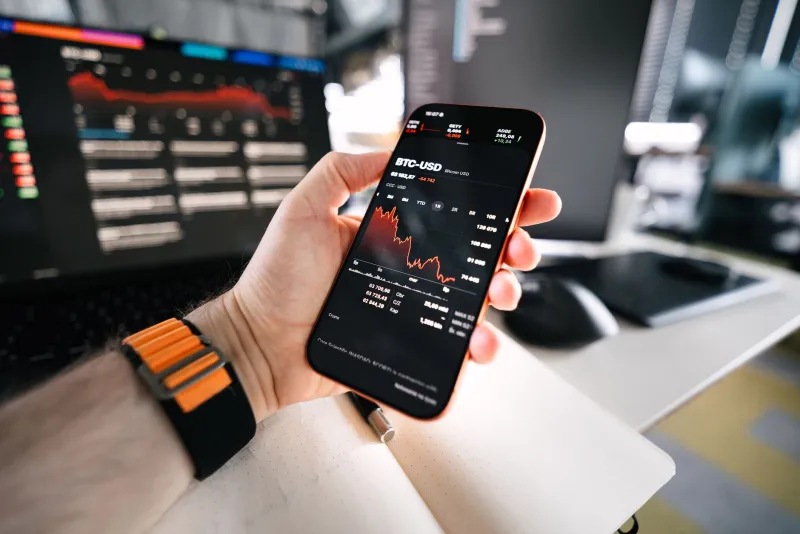
Here's a fun thought experiment: if a stranger scrolled through six months of your digital wallet transactions, what would they think about you? Would they see someone who meal-preps on Sundays and sticks to a budget? Or would they find a trail of 2 a.m. DoorDash orders, impulse buys on Amazon, and four separate streaming services that somehow all renewed on the same week?
The uncomfortable truth is that your spending data already knows the answer — and it knows it better than you do.
Fintech platforms have quietly become some of the most sophisticated behavioral tracking tools in everyday life. Not in a creepy, surveillance-state kind of way, but in a way that reflects something deeply human: our money habits reveal what we actually value, not just what we tell ourselves we value.
What Transaction Data Actually Captures
Every time you tap your phone at a coffee shop or authorize a payment through your digital wallet, you're generating what data scientists call behavioral metadata. That's not just the dollar amount — it includes the time of day, the merchant category, how frequently you return, and even how that purchase clusters with others around it.
Fintech companies analyze these patterns at scale. They're looking for things like:
- Stress spending triggers: Do your discretionary purchases spike on Monday evenings? That might correlate with end-of-workday stress relief, a pattern behavioral economists have documented extensively.
- Routine vs. impulse purchases: Transactions that happen at consistent times and locations are routine. The random Tuesday afternoon spend at a home goods store? That's likely impulse.
- Social spending cycles: Many people unconsciously increase their spending around paydays, holidays, or even after checking social media — all of which show up clearly in transaction timing data.
Your wallet doesn't judge any of this. It just records it. But that record is a goldmine of self-knowledge if you're willing to look.
The Gap Between Intention and Action
Most of us have a mental story about our finances that doesn't quite match reality. We think of ourselves as "pretty good with money" while quietly ignoring the $300 a month we're dropping on restaurants we barely remember visiting. Or we consider ourselves savers while keeping a credit card balance that's been hovering in the same uncomfortable range for two years.
This gap between financial self-image and financial reality is well-documented in behavioral economics. It's sometimes called the intention-action gap, and digital wallet data makes it painfully visible.
One of the most common patterns? People dramatically underestimate their food spending. In survey after survey, consumers guess they spend 30 to 40 percent less on dining and delivery than their actual transaction history shows. Digital wallets don't let you fudge those numbers — every Uber Eats order, every Starbucks run, every "quick lunch" that somehow cost $22 is right there in the ledger.
That's not a criticism. It's an opportunity.
How Fintech Platforms Are Turning Data Into Insight
The smarter digital wallet platforms aren't just passively recording your transactions — they're starting to surface those patterns back to you in useful ways. Spending categorization, weekly summaries, and budget alerts are the basics. But some platforms are going further.
Behavioral nudges — small prompts that appear before or after a transaction — are becoming more common. Think of a gentle notification that says "You've spent $180 on coffee this month" right before you authorize another latte. It doesn't block the purchase. It just introduces a moment of awareness between impulse and action, which research suggests is often enough to shift behavior.
Some apps are also experimenting with spending mood tagging, letting users note how they felt before and after a purchase. Over time, this builds a personal map of emotional spending patterns — the purchases that genuinely bring satisfaction versus the ones that leave you feeling vaguely guilty an hour later.
At WalletTW, we think this kind of reflective financial tooling is where the real value of digital payments is heading. It's not just about moving money faster. It's about understanding money better.
Using Your Own Data to Spend with Intention
You don't need a fancy AI dashboard to start benefiting from your own transaction data. Here are some concrete ways to use what your digital wallet already knows:
Run a monthly merchant audit. Pull up your last 30 days of transactions and list out every unique merchant. Not the amounts yet — just the names. Often, seeing the sheer number of places you're spending is more revealing than any dollar figure.
Look for the Friday-Saturday pattern. For many people, weekend spending is where budgets quietly collapse. Check whether your discretionary spending clusters on certain days of the week. If it does, that's a targeted area to build a simple guardrail — like a self-imposed daily spending limit on weekends.
Identify your "invisible" subscriptions. Search your transaction history for any recurring charge under $20. These are the ones that fly under the radar but add up fast. If you can't immediately name what the service is or when you last used it, that's your answer.
Track the time stamps. Late-night purchases — especially online — tend to be less intentional than daytime ones. If you notice a pattern of spending between 10 p.m. and midnight, consider setting a simple rule: add to cart, but don't check out until morning.
Compare your stated priorities to your actual spending. Write down your top three financial priorities right now. Then open your wallet history and ask honestly: does my spending reflect those priorities? The delta between your answer and your data is your starting point for change.
The Real Power Move
Here's the thing about all this data: knowing it exists is only half the battle. The other half is deciding to actually look.
Most people avoid their transaction history the same way they avoid the scale — not because the information isn't available, but because they're not sure they want to confront what it says. But your digital wallet isn't keeping score to shame you. It's keeping score because that's the only way to play a smarter game.
The consumers who build real financial momentum aren't necessarily the ones who earn the most or spend the least. They're the ones who close the gap between what they think they're doing with their money and what they're actually doing. And right now, the tools to do exactly that are sitting in your pocket, waiting to be used.
Your wallet already knows you. It might be time to return the favor.